BLOG
SIL vs Individualised Living Options (ILO): Which Is Right For You?
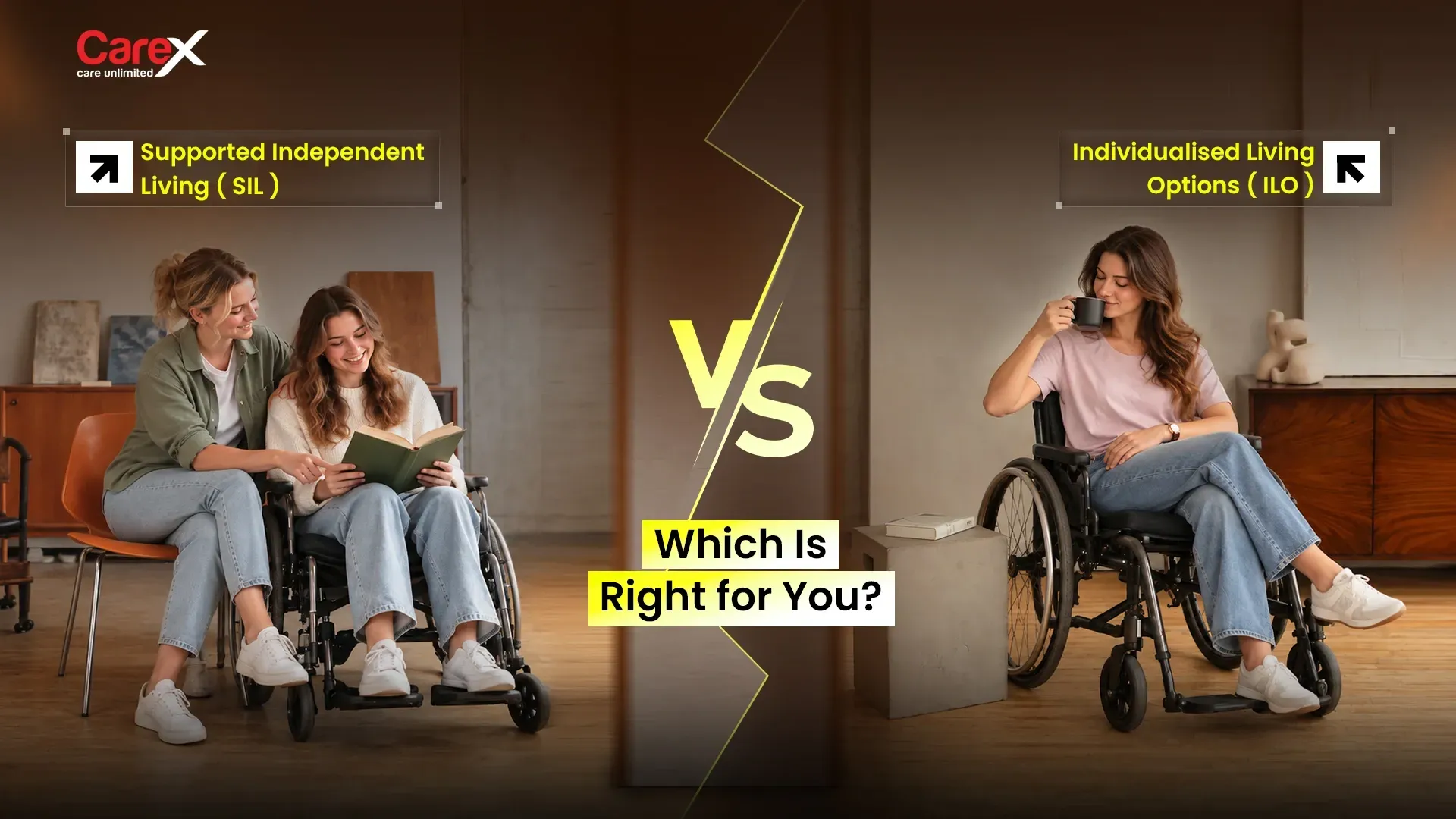
Supported Independent Living (SIL) is the type of NDIS funding for support workers who help you with daily activities at home. It usually includes around the clock support and is typically in a shared house with similar participants who require the same needs. On the other hand, Individualised Living Options (ILO) is the NDIS funding that lets you design your own living set-up, fully according to your choice. You might live with a host family, share a home with a housemate, or live on your own with support. The choice is completely yours.
So, which NDIS housing option is right for you? SIL usually suits people who need constant, hands-on support and a steady routine. While, ILO usually suits people who want more choice and control over where and who they live with. It works best for people who can combine paid help with support from family, friends and their community.
It is true that your environment, especially where you live, shapes your whole day. So when it comes to this choice, it deserves a whole lot of your time, care and understanding. This guide will help you understand how each option works and compare them side by side. It also gives you questions to bring to your next planning meeting. Whether you're a participant, a family member or a Support Coordinator, this will help you get a better understanding of both the options and from there, you can choose your right fit.
Quick Answer
| Choose SIL if you.... | Choose ILO if you... | |
|---|---|---|
| Support needs | Need help for most of the day and night | Need regular support, with gaps you can manage |
| Routine | Like a structured, predictable day | Want a flexible set-up that changes with you |
| Living setup | Feel comfortable sharing a home with other participants | Want to choose who you live with, or live alone |
| Support network | Rely mostly on paid support workers | Have family, friends or community who can help too |
A few things apply to both options:
- The NDIA funds both through your NDIS plan.
- You pay your own rent, food and bills under either option.
- You can ask to switch from one to the other as your needs and goals change.
What is Supported Independent Living (SIL)?
SIL funds a support worker to help with, or supervise, everyday tasks at home. The goal is for you to live as independently as you can while you keep building your skills.
The NDIA funds SIL from your Core Supports budget, under Assistance with Daily Life. Your provider works with you to build a Roster of Care. This sets out who supports you, when they're there, and how many staff are on each shift. Most people who receive SIL have higher support needs. Some need support around the clock, including active or sleepover shifts overnight. Many share a home with a few other participants, and one support team covers the whole house on a roster.
SIL support can include help with:
- Personal care, such as showering and dressing
- Cooking, cleaning and laundry
- Taking medication safely
- Budgeting and paying bills
- Getting out into the community
SIL pays for the people who support you. It doesn't pay for rent, groceries or electricity. You cover those from your own income, just like any other household.
What are Individualised Living Options (ILO)?
ILO gives you a blank page. Instead of fitting into an existing house and schedule, you design a support set-up around the life you want, with the people you choose.
The NDIA funds ILO in two stages:
- Exploration and design. You work with an ILO provider to think about where you want to live, who with, and what help you need. Together, you shape a support model.
- Setting up and keeping supports going. Once your plan includes the funding, your provider helps you put that model in place and adjusts it as your life changes.
ILO arrangements often look like this:
- Host arrangement: you move in with a host person or family who supports you day to day.
- Co-residency: a housemate lives with you and gives agreed support, often at night or in the mornings.
- Living alone with support: you have your own place, and a mix of paid and unpaid help drops in.
- Living with family: you stay with relatives, with extra support that eases the load on them.
ILO also draws on your wider circle. Friends, neighbours, community groups and assistive technology all form part of the picture. Like SIL, ILO doesn't cover rent or living costs.
SIL vs ILO at a glance
This table puts the two options side by side so you can spot the differences quickly.
| SIL | ILO | |
|---|---|---|
| Living set-up | Usually a shared home with other participants | Your choice: alone, with a host, with a housemate or with family |
| Support style | Rostered support workers, often around the clock | A tailored mix of paid help, housemates, family and community |
| Best for | Higher, more constant support needs | People who want a flexible, personal arrangement |
| Funding | Core Supports, based on your Roster of Care | Exploration and design first, then ongoing supports |
| Who you live with | Often other people with disability | People you pick, or no one at all |
| Rent and bills | You pay them | You pay them |
Who does each option suit?
No single option works for everyone. What matters here is your needs, goals, personality and choice.
SIL often suits you if you:
- Need help or supervision for most of the day and night
- Feel safer knowing a trained worker is always close by
- Enjoy living with others and having company at home
- Want a stable routine with a consistent team
ILO often suits you if you:
- Need regular support, though not a worker on shift all the time
- Want a say in exactly who you live with
- Have family, friends or a community you want to stay close to
- Like the idea of a set-up that grows and changes with you
These choices matter a lot. The NDIS, currently supports more than 660,000 participants, according to the NDIA's quarterly reports. Along with that, the independent NDIS Review final report, released in December 2023, called for participants to have more choice over where they live and who they live with.
Questions to ask yourself and your family
Sit down with the people who know you best and talk through these questions. Take your time. There are no wrong answers.
- What does a good day at home look like for me?
- Which tasks can I do on my own, and where do I need a hand?
- Do I like having people around, or do I need plenty of quiet?
- Who would I love to live with? Who would I rather not live with?
- How close do I want to be to family, work, school or friends?
- What would help me feel safe at night?
- Which skills do I want to build over the next year or two?
Write your answers down. They give your planner a clear picture of what matters to you as well as your expectations and that makes the conversation much easier and understanding on both ends.
How to get SIL or ILO into your NDIS Housing Options
Both of these NDIS housing options need funding in your plan before you can start.
Here's the usual path:
- Raise it early. Tell your NDIA planner, Local Area Coordinator or Support Coordinator that you want to explore home and living supports.
- Gather evidence. The NDIA usually asks for reports that show your support needs. An occupational therapist's functional assessment often carries a lot of weight.
- Share your goals. Use your answers from the questions above. Clear, personal goals help the NDIA understand why a certain option fits you.
- Wait for the decision. The NDIA checks whether the support is "reasonable and necessary" for you. If it approves the funding, it updates your plan.
- Choose a provider. Pick a registered provider you trust and who understands and listen to your goal and needs.
Making the choice that feels like home
Choosing between SIL vs. ILO can feel like a big step. That's completely normal. You're deciding how you want to live, and that deserves time and care. SIL and ILO both work well for the right person. The best NDIS housing option is the one that fits your life today.
Keep a few things in mind as you weigh the options:
- Your choice can change as your life changes.
- Your voice matters most in the decision.
- A good provider will explain your options honestly and respect your pace.
At CareX Australia, as a registered NDIS provider, we provide support in all aspects of your life after carefully listening to your needs. The expert and empathetic team of professionals strive to deliver the best for you at every step of the way. We listen first. Then we help you understand your options, prepare for planning conversations and build support around the life you want.
Not sure where to start?
Book a consultation with the CareX Australia team. We'll answer your questions and help you take the next step with confidence.