BLOG
In-Home Care vs Assisted Living | CareX Australia
Introduction
There comes a point in many families’ lives when everyday routines start to feel a little harder to manage. It might be missed medication, increasing falls risk, or difficulty keeping up with personal care and household tasks. These changes can feel worrying, especially when the goal is to protect independence while still keeping a loved one safe and supported.
Two common options families consider are in-home care and assisted living. Both provide valuable support, but they offer very different experiences in how life is lived each day. Understanding these differences can make the decision feel clearer and more confident.
At CareX Australia, we support individuals and families across NSW with care that is personal, respectful, and focused on independence and dignity.
Understanding the Two Care Options
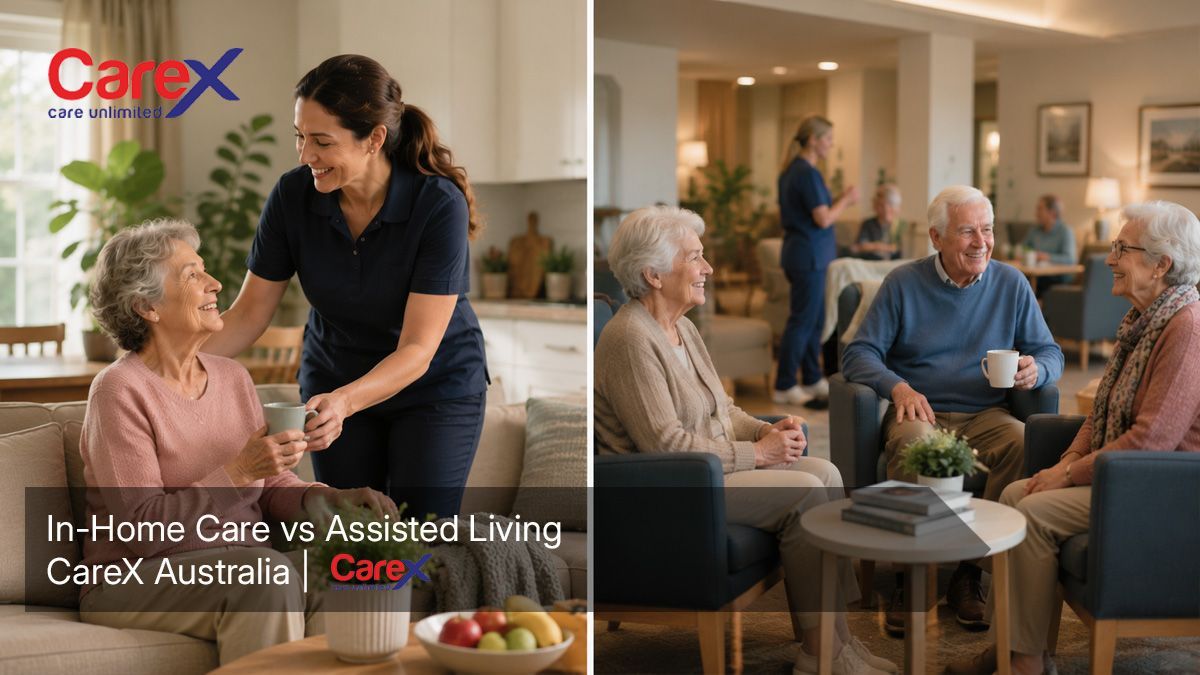
Both in-home care and assisted living are designed to support people who need help with daily living. The main difference is where the care happens and how much control a person has over their daily environment and routine.
- In-home care provides support within the comfort of home.
- Assisted living involves moving into a supported residential community where care and services are provided on-site.
Staying at Home vs Moving into a New Environment
Where care is delivered can greatly influence comfort and emotional wellbeing.
- In-Home Care with CareX Australia
In-home care allows people to remain in familiar surroundings. Being at home often brings comfort, stability, and a sense of control over daily life. This can be especially important for those who feel unsettled by change or rely on routine.
- Assisted Living
Assisted living involves relocating to a residential setting where meals, support, and activities are provided in a shared environment. While supportive, it requires adjusting to new routines and surroundings.
- Key takeaway: In-home care supports independence in a familiar home environment, while assisted living offers structured community living.
Personalised Support vs Shared Assistance
The way care is delivered can shape how personal and consistent the support feels.
- In-Home Care (CareX Australia Support at Home)
Care is provided one-on-one, allowing support workers to focus entirely on the individual’s needs, preferences, and routines.
- Assisted Living
Support staff assist multiple residents throughout the day. Care is available and reliable, but attention is shared among many people.
- Key takeaway: In-home care provides more personalised attention, while assisted living offers shared but consistent support.
Flexible Daily Living vs Structured Routine
Daily routines can have a strong impact on comfort and independence.
- In-Home Care (CareX Australia Flexible Support)
Support is built around individual routines. Assistance can be arranged when needed, whether for a few hours or ongoing daily care.
- Assisted Living
Daily life follows a set schedule, including planned meal times, activities, and organised routines for all residents.
- Key takeaway: In-home care adapts to personal lifestyle choices, while assisted living provides a structured daily rhythm.
Independent Social Life vs Built-In Connection
Social connection plays an important role in wellbeing, but it looks different in each setting.
- In-Home Care (CareX Australia Community Participation Support)
Individuals choose how they stay socially connected, whether through family visits, community groups, or local activities, with support when needed.
- Assisted Living
Social engagement is built into daily life with group activities, shared meals, and organised events that encourage interaction and connection.
- Key takeaway: Assisted living offers built-in social opportunities, while in-home care supports independent social choice.
Flexible Costs vs Set Pricing Structure
Understanding how care is paid for helps families plan with confidence.
- In-Home Care (CareX Australia Services)
Families generally pay for the support they use. Care can increase or decrease depending on changing needs.
- Assisted Living
Most assisted living communities charge a set fee covering accommodation, meals, and basic support, with additional costs for higher levels of care.
- Key takeaway: In-home care offers flexible, usage-based costs, while assisted living follows a more structured pricing model.
Care That Adapts vs Care That May Require Transition
As needs change, care needs to adapt with them.
- In-Home Care (CareX Australia Coordinated Support)
Support can increase over time, from basic assistance through to more complex care needs. Services such as In-Home Support, Support Coordination, and High-Intensity Daily Personal Activities can work together to support changing needs.
- Assisted Living
While ongoing support is provided, increasing care needs may require a move to a higher level of care environment.
- Key takeaway: In-home care adapts within the home, while assisted living may involve transition if needs change significantly.
Choosing the Right Path
Every family’s situation is different, and there is no single right answer. The best choice depends on safety needs, personal preferences, health conditions, and the level of independence someone wishes to maintain.
In-home care allows people to stay connected to their home, routines, and independence. Assisted living offers structure, community living, and on-site support.
What matters most is that the person receiving care feels safe, respected, and supported in their daily life.
How CareX Australia Supports Independent Living
CareX Australia provides personalised support across NSW, helping people live safely and independently at home and in the community.
Our Services Include:
- Supported Independent Living (SIL)
- In-Home Support
- Respite Care
- Community Participation
- Support Coordination
- Psychosocial Support
- Individualised Living Options (ILO)
- High-Intensity Daily Personal Activities
Each support plan is shaped around personal goals, routines, and independence.
Final Thoughts
Choosing between in-home care and assisted living is a significant decision for any family. Both provide valuable support, but in very different ways.
In-home care focuses on comfort, familiarity, and independence, while assisted living provides structure and community-based living.
With CareX Australia, families across NSW can access flexible, person-centred support designed to adapt as needs change and help people live with dignity and confidence.
FAQs
What is the main difference between in-home care and assisted living?
In-home care provides support in the home, while assisted living involves living in a supported residential community with on-site services.
Is in-home care more flexible than assisted living?
Yes, in-home care can be adjusted based on changing needs and personal routines.
Does assisted living include social activities?
Yes, most assisted living communities offer group activities, shared meals, and organised social engagement.
Can in-home care increase as needs change?
Yes, support can be increased over time as care needs grow or change.
How do families decide between the two options?
It depends on comfort, independence goals, health needs, and preference for home-based or community living.
Disclaimer
This article is intended for general information only. It does not replace professional or medical advice. For personalised support, please contact CareX Australia or speak with a qualified professional.