BLOG
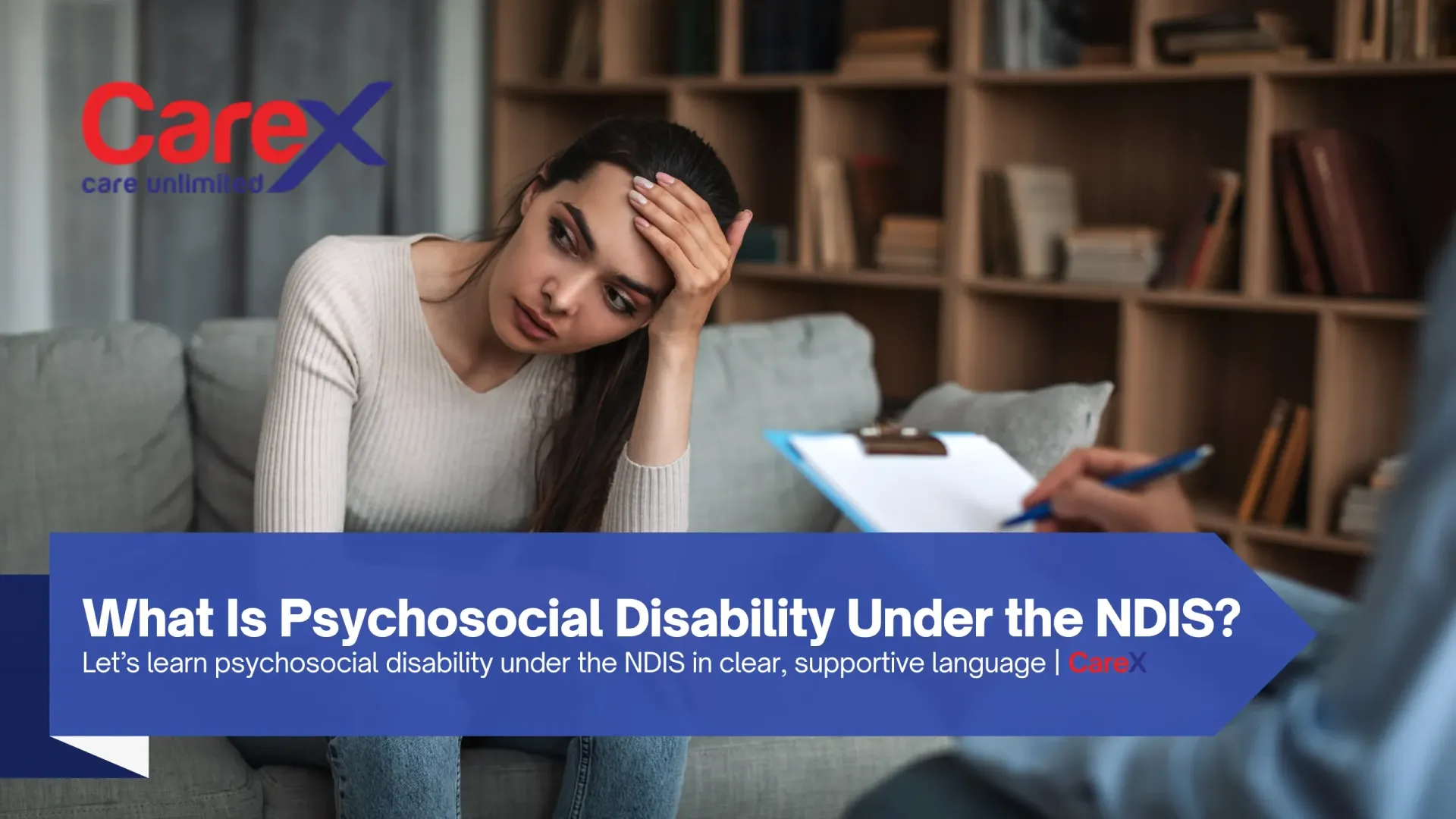
What Is Psychosocial Disability Under the NDIS?
Introduction
Living with mental health challenges can affect many parts of daily life — relationships, work, routines, and a sense of independence. For some people, these impacts are ongoing and significant. Under Australia’s National Disability Insurance Scheme (NDIS), this experience may be recognised as a psychosocial disability.
This blog explains psychosocial disability under the NDIS in clear, supportive language. We’ll cover what it is, who it’s for, how it works in Australia, and what to consider when deciding if NDIS supports are right for you.
What Is Psychosocial Disability?
Psychosocial disability refers to the impact that ongoing mental health conditions can have on a person’s ability to participate fully in everyday life.
It’s important to understand that psychosocial disability is not the same as a mental health diagnosis.
Instead, it focuses on:
- How a mental health condition affects daily functioning
- The barriers a person experiences in social, emotional, or practical areas of life
- The support someone may need to live independently and with dignity
A person may experience psychosocial disability when mental health challenges are persistent, significant, and affect everyday activities such as:
- Managing routines
- Maintaining relationships
- Working or studying
- Making decisions
- Participating in the community
Under the NDIS, the focus is on functional impact, not labels.
Who Is Psychosocial Disability For?
Psychosocial disability can affect people in different ways and at different stages of life. Under the NDIS, it may apply to people whose mental health condition creates long-term challenges in daily functioning.
It may be relevant for people who:
- Live with conditions such as severe anxiety, bipolar disorder, schizophrenia, or major depression
- Experience ongoing difficulty with motivation, organisation, or emotional regulation
- Need regular support to manage daily life or stay connected socially
- Have mental health challenges that are expected to be long-term
Everyone’s experience is unique. Two people with the same diagnosis may have very different support needs. That’s why the NDIS looks at individual circumstances, not assumptions.
How Psychosocial Disability Works Under the NDIS in Australia
The National Disability Insurance Scheme (NDIS) provides funding for reasonable and necessary supports to help eligible people live more independently and participate in their communities.
NDIS Recognition of Psychosocial Disability
Psychosocial disability is recognised as one of the disability types under the NDIS. To be eligible, a person must show that:
- Their mental health condition is likely to be permanent
- It substantially affects their ability to carry out everyday activities
- They require ongoing support
The focus is on how life is impacted, not just medical history.
Supports May Include
Depending on individual needs, NDIS supports for psychosocial disability may include:
- Support with daily living and routines
- Help building social skills and confidence
- Support coordination to navigate services
- Capacity-building supports
- Community participation support
The goal is to build skills, confidence, and choice — not dependency.
Benefits of NDIS Support for Psychosocial Disability
With the right support in place, people living with psychosocial disability can experience meaningful improvements in quality of life.
Greater Independence
- Support to manage daily tasks at your own pace
- Encouragement to build routines that work for you
- Increased confidence in decision-making
Improved Wellbeing
- Reduced stress through consistent, reliable support
- Better connection to community and services
- Support that respects emotional and mental health needs
Choice and Control
- You decide what supports work best for you
- Flexibility to adjust supports as needs change
- A plan tailored to your goals, not a one-size-fits-all approach
At its core, the NDIS is about empowering people to live the life they choose.
Things to Consider Before Choosing NDIS Support
NDIS support is not the right fit for everyone — and that’s okay. It’s important to reflect on your personal situation and preferences.
Consider:
- What areas of daily life are most challenging right now?
- What kind of support feels helpful versus overwhelming?
- Do you prefer structured support or flexible assistance?
- What are your short-term and long-term goals?
It can also help to speak with trusted professionals, family members, or a support coordinator who understands psychosocial disability in the Australian context.
Is Psychosocial Disability Support Right for You?
Only you can decide what feels right — but asking reflective questions can help.
You might benefit from NDIS psychosocial disability supports if:
- Mental health challenges significantly affect your daily functioning
- You want support to build independence, not replace it
- You value personalised, flexible support
- You’re looking for long-term strategies rather than short-term fixes
There is no “right” or “wrong” answer. Seeking support is about strengthening your capacity, not defining your limitations.
How CareX Australia Can Support
Navigating psychosocial disability supports can feel complex, especially when systems and terminology become overwhelming.
At CareX Australia, we believe in person-centred care that respects each individual’s lived experience. Our approach focuses on:
- Listening first
- Tailoring supports to your goals and pace
- Encouraging independence and confidence
- Providing culturally respectful, practical assistance
With the right support, people living with psychosocial disability can build skills, strengthen connections, and feel more in control of their lives.
A trusted NDIS provider can help translate plans into everyday support that feels human, not clinical.
Frequently Asked Questions (FAQs)
Is psychosocial disability the same as mental illness?
No. Mental illness refers to a health condition, while psychosocial disability refers to the functional impact that a mental health condition may have on daily life.
Can I get NDIS funding if my condition changes over time?
Yes. The NDIS understands that psychosocial disability can be episodic. Plans can be reviewed and adjusted as needs change.
Do I need a specific diagnosis to apply?
A diagnosis alone is not enough. The NDIS looks at how your condition affects your ability to function in everyday life and whether the impact is likely to be long-term.
Can psychosocial disability supports help with social isolation?
Yes. Many supports focus on community participation, confidence-building, and strengthening social connections.
Is NDIS support mandatory if I’m eligible?
No. Participation in the NDIS is a choice. You decide if and how you want to use supports.
Final Thoughts
Psychosocial disability under the NDIS recognises that mental health challenges can have real, lasting impacts on daily life — and that people deserve support that respects their individuality, dignity, and goals.
Understanding your options is an important first step. Whether you’re exploring the NDIS for yourself or supporting someone else, compassionate, informed guidance can make a meaningful difference.
With the right support, independence, wellbeing, and choice are not just possible — they’re achievable.