
BLOG
Proactive vs Reactive Support Coordination: Why It Matters in NSW
Introduction
Many families and participants don’t realise the difference between proactive and reactive support coordination until something goes wrong. Plans get delayed, services fall through, or goals feel out of reach.
If you’re navigating the NDIS in NSW, understanding how support coordination works can make a real difference to your independence, confidence, and overall quality of life. Choosing the right approach is not just about managing services. It is about building a life that reflects your goals and choices.
What Is Support Coordination?
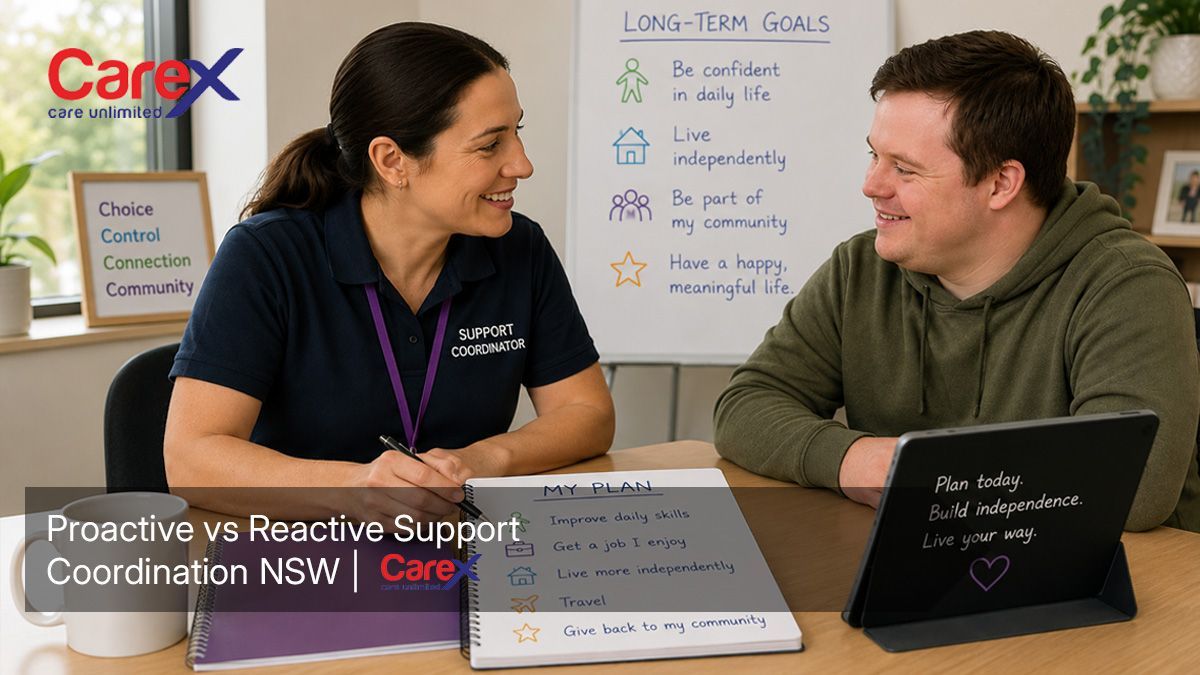
Support Coordination helps you understand and use your NDIS plan in a way that works for you. It connects you with the right supports and helps you stay on track with your goals.
This can include:
- Finding suitable service providers
- Organising supports like In-Home Support or Community Participation
- Managing service agreements
- Building your confidence to make informed choices
At its core, support coordination should empower you to take control of your plan, not feel dependent on it.
Reactive Support Coordination: What It Looks Like
Reactive support coordination focuses on responding to issues after they arise. While it can be helpful in urgent situations, it often means you are constantly catching up rather than moving forward.
You might experience:
- Delays in finding services
- Missed opportunities for skill development
- Limited planning for future goals
- Increased stress for families and participants
This approach can feel like you are always putting out fires instead of building stability.
Proactive Support Coordination: A Better Way Forward
Proactive support coordination is about planning and working towards long-term outcomes. It focuses on preventing challenges before they happen and supporting steady progress.
This approach includes:
- Regular check-ins and planning
- Early identification of gaps in supports
- Preparing for plan reviews
- Aligning services with your personal goals
Instead of reacting to problems, proactive support coordination creates a clear path toward independence and confidence.
Why This Matters Now in NSW
With increasing demand for NDIS services across NSW, waiting until issues arise can lead to delays and limited choices. A proactive approach helps you stay ahead, ensuring your support continues without disruption.
It also means:
- Greater control over your support team
- More consistent progress toward your goals
- Better use of your NDIS funding
- Reduced stress for you and your family
In today’s environment, being prepared is not just helpful. It is essential.
How Support Coordination Supports Real-Life Outcomes
The right support coordination does more than organise services. It supports meaningful outcomes in everyday life.
This can include:
- Building daily living skills through Supported Independent Living (SIL)
- Staying connected through Community Participation
- Receiving consistent care with In-Home Support
- Taking breaks when needed with Respite Care
When everything is aligned with your goals, you are more likely to feel confident, capable, and in control.
How CareX Australia Supports You
At CareX Australia, support coordination is approached with a proactive and person-centred mindset. The focus is always on your goals, your preferences, and your independence.
The team works alongside you to:
- Understand what matters most to you
- Plan for both short-term and long-term needs
- Connect you with services that match your lifestyle
- Support you through changes and plan reviews
Whether you are starting your NDIS journey or looking to get more from your plan, CareX Australia is here to guide you with clarity and care.
Key Benefits of Proactive Support Coordination
- Greater independence and confidence
- Stronger alignment with personal goals
- Fewer disruptions to your supports
- Better planning for the future
- Reduced stress for families
Final Thoughts
The difference between proactive and reactive support coordination can shape your entire NDIS experience. One keeps you stuck responding to problems, while the other helps you move forward with purpose.
If you want more control, clearer direction, and better outcomes, a proactive approach can make all the difference. With the right support, you can build a plan that truly supports your life, not just manages it.
FAQS
What is proactive support coordination in the NDIS?
Proactive support coordination focuses on planning, preventing issues, and helping participants achieve their long-term goals rather than reacting to problems as they arise.
How is reactive support coordination different?
Reactive support coordination responds to issues after they happen. This can lead to delays, stress, and less consistent progress toward goals.
Why is proactive support coordination important in NSW?
With high demand for services in NSW, planning helps avoid delays, ensures continuity of support, and improves overall outcomes.
Can support coordination help me become more independent?
Yes. Good support coordination builds your skills, confidence, and ability to manage your supports independently over time.
How can CareX Australia help with support coordination?
CareX Australia provides person-centred, proactive support coordination that focuses on your goals, helping you plan and make the most of your NDIS plan.
Disclaimer
This article is for general information only. It is not a substitute for professional advice or individual assessment. For personalised support, please contact CareX Australia or speak with a qualified professional.