
BLOG
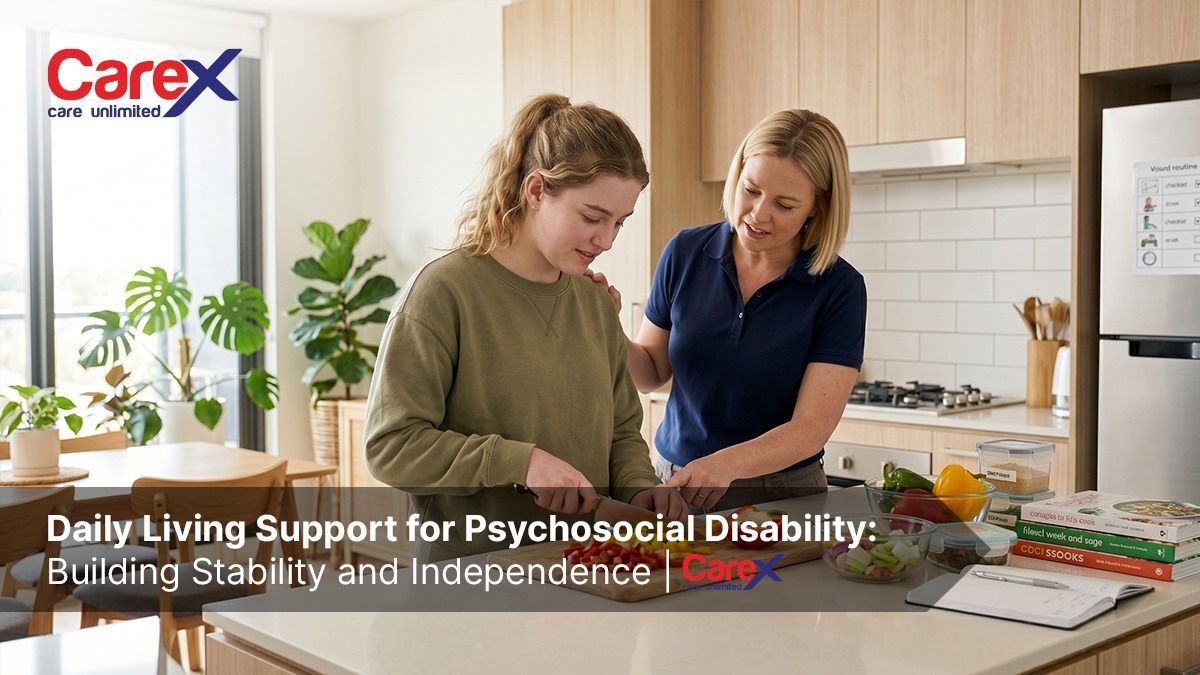
Living with a psychosocial disability can affect how a person manages everyday life. Conditions such as schizophrenia, bipolar disorder, or severe depression can make routine tasks feel overwhelming at times.
This is where daily living support plays an important role. It focuses on practical, non-clinical assistance that helps people build structure, confidence, and independence in their day-to-day lives. Unlike therapy, which focuses on treating mental health conditions, this type of support is about living well in the real world with the right help in place.
What Daily Living Support Really Means
Daily living support is designed to help people manage the functional impact of mental health challenges.
It is not about treatment or diagnosis. Instead, it focuses on:
- Building routine and stability
- Supporting daily tasks that may feel difficult
- Encouraging independence step by step
- Reducing stress and daily overwhelm
The goal is simple: help people feel more in control of their daily lives in a safe and supported way.
Creating Structure Through Daily Routines
One of the most helpful parts of daily living support is establishing consistent routines.
When mental health fluctuates, even simple tasks can feel hard to start or maintain. Support workers help by creating gentle, realistic routines such as:
- Morning routines like waking up, hygiene, and dressing
- Evening routines that support rest and sleep
- Simple daily planning to reduce confusion or stress
These routines are not rigid. They are flexible and designed around what the person can manage comfortably.
Support with Home and Personal Tasks
Daily life includes many small responsibilities that can become overwhelming during difficult periods.
Support may include help with:
- Grocery shopping and meal planning
- Preparing simple, healthy meals
- Cleaning, laundry, and keeping the home organised
- Managing appointments and daily schedules
- Budgeting and basic financial tasks
The focus is always on building skills over time, not just doing things for the person.
Emotional Support and Coping in Everyday Life
Mental health recovery is not only about practical tasks. Emotional well-being matters just as much.
Support workers often provide:
- A calm and non-judgemental presence
- Someone to talk to during stressful moments
- Help in identifying triggers for anxiety or distress
- Encouragement to use coping strategies
- Support in working towards personal recovery goals
This steady support helps people feel less alone and more understood in their daily life.
Reconnecting with the Community
Isolation can be a major challenge for people living with psychosocial disability.
Daily living support can help rebuild confidence in social settings by encouraging:
- Attending community groups or activities
- Going for walks or visiting local spaces
- Joining social or recreational programs
- Attending appointments with support when needed
- Learning or relearning how to use public transport
These small steps help people feel more connected and confident in their community again.
Support That Changes with the Person
Every person’s needs are different, and those needs can change from day to day.
That is why support is always person-centred and flexible. On some days, support may focus on:
- Planning the week
- Shopping and appointments
- Skill-building, like cooking or budgeting
On harder days, support may simply mean:
- Quiet company
- Emotional reassurance
- Help with grounding and safety
- Gentle encouragement without pressure
The aim is always to meet the person where they are.
CareX Australia’s Approach to Daily Living Support
At CareX Australia, daily living support is delivered with a strong focus on respect, independence, and personal choice.
Support is designed to:
- Build confidence in everyday life
- Encourage independence at a comfortable pace
- Support emotional and practical needs together
- Help participants stay connected to their community
- Provide consistent and reliable assistance
The focus is not just on support itself, but on helping people feel more capable and in control of their own lives.
Key Benefits of Daily Living Support
People receiving this type of support often experience:
- More stable daily routines
- Improved confidence with everyday tasks
- Reduced stress and overwhelm
- Better social and community engagement
- Stronger independence over time
It is about creating a life that feels manageable, meaningful, and supported.
FAQS
What is daily living support for psychosocial disability?
It is practical, non-clinical support that helps people manage everyday tasks and build independence while living with mental health conditions.
How is daily living support different from therapy?
Therapy focuses on treating mental health conditions, while daily living support focuses on helping with everyday life skills and routines.
What kind of tasks does a support worker help with?
Support may include cooking, cleaning, shopping, budgeting, attending appointments, and building daily routines.
Can support change depending on my mental health on the day?
Yes. Support is flexible and adjusts based on how the person is feeling and what they need at that time.
Does daily living support help with community participation?
Yes. It can include help with social activities, transport, and reconnecting with community life in a safe and supported way.
Disclaimer
This article is intended for general informational purposes only. It does not provide medical, clinical, or psychological advice. Support needs vary from person to person, and anyone seeking personalised guidance should contact a qualified health professional or speak with CareX Australia for tailored support options.